
Kids Orthodontics in Arlington, VA
Kids Ages 7-8: Get an Orthodontic Evaluation!
Early orthodontic treatment with braces or an expander (called Phase I Orthodontics) is sometimes needed. Dr. Markova has lectured to the Pediatric and Orthodontic Dental Residents at the University of Maryland on this exact topic for years, so it’s something she is quite passionate about!
All children should be evaluated by an orthodontist at around age 7 or 8. She will check to ensure that all adult teeth have adequate space, that there are no breathing/airway issues, and that the jaws are developing normally.
See Dr. Markova explain how expanders can fix overcrowding!
Fixing crowding with braces and expanders
Got shark teeth?
The most common issue I see is overcrowding of the adult teeth. About 20-30 years ago, the philosophy was to wait until all of the adult teeth erupt, which is usually around age 12, and then start with orthodontic treatment. The problem with this philosophy is that many times kids do not have space for all of the adult teeth, and a lot of people in the past had to have at least 4 adult teeth extracted.
The other problem with waiting is that teeth can cause a lot of issues if there is not enough space for them to come into the mouth, which means very lengthy treatment and other procedures needed as teens. My personal philosophy is to create space for teeth and prevent problems when kids are younger, referred to as “Phase I” of orthodontic treatment. Usually what is required is an expander with a combination of a few mini braces.

The expander is placed on the upper jaw and the ideal time to create space for teeth is when the upper jaw is flexible around the ages of 7-8 years old. The upper canines are very large and develop high up, on either side of the nose. The upper canines are the teeth most likely to become impacted (which means stuck up in the jaw) or cause root resorption on the adjacent teeth (which means eating away the roots of the lateral incisors) as they try to come into the mouth without enough space. The upper jaw has a “soft spot”, which is the midpalatal suture, and can easily be expanded to create space ages 7-8.
Jaw Development and Airway Orthodontics
I’m screening for crossbites or problems with the jaw development, especially as it relates to breathing. There are many missed or misdiagnosed sleep disordered breathing issues in kids at ages 7-8. There are certain jaw patterns, like a hyperdivergent facial pattern, that are apparent at this age, which correlate with breathing problems. A constricted or narrow upper jaw is one of them. Snoring during sleep is another indicator. Children should NOT be snoring and many times there is blockage in the mouth, throat (adenoids/tonsils) or nose. By using an expander to expand the jaw we can hopefully improve some breathing issues.
At what age should a child see an orthodontist?
The American Association of Orthodontists recommends that children have their first orthodontic evaluation around age 7. At this age, the orthodontist can evaluate jaw growth, crowding, bite problems, and how permanent teeth are coming in. Even if no treatment is needed right away, early evaluation allows the orthodontist to monitor growth and determine the best time to start treatment if needed.
What problems can early orthodontic treatment fix?
Early orthodontic treatment can help correct many orthodontic problems while a child is still growing. These include severe crowding, narrow upper jaw, crossbite, underbite, overbite, thumb sucking effects, impacted teeth, and early or late loss of baby teeth. Treating these problems early can guide proper jaw development and make future orthodontic treatment easier and shorter.
How long does early orthodontic treatment take?
Early orthodontic treatment typically lasts about 9 to 12 months, depending on the orthodontic problem being treated. After Phase 1 treatment is complete, the orthodontist will monitor growth and usually recommend Phase 2 treatment (full braces or Invisalign) once all permanent teeth have erupted, typically in the early teenage years.
Will my child still need braces after early orthodontic treatment?
Many children will still need braces or Invisalign after early orthodontic treatment, but Phase 1 treatment often makes Phase 2 treatment shorter, easier, and less complicated. Early orthodontic treatment focuses on jaw growth and bite correction, while later treatment focuses on final tooth alignment and bite finishing.
What are the benefits of early orthodontic treatment?
Early orthodontic treatment can guide jaw growth, create space for permanent teeth, reduce crowding, correct crossbites and underbites, reduce risk of trauma to protruding front teeth, improve facial balance, and potentially prevent more complicated orthodontic treatment later. In some cases, early treatment can reduce the need for tooth extractions or jaw surgery.
Is early orthodontic treatment necessary for every child?
Not every child needs early orthodontic treatment. Some children benefit from waiting until all permanent teeth come in before starting orthodontic treatment. The best way to determine whether early orthodontic treatment is needed is to schedule an orthodontic evaluation around age 7 so the orthodontist can monitor growth and development.
What is Phase 1 and Phase 2 orthodontic treatment?
Phase 1 orthodontic treatment refers to early treatment performed while a child still has baby teeth and permanent teeth. This phase focuses on jaw growth and bite correction. Phase 2 orthodontic treatment occurs later when all permanent teeth have erupted and typically involves braces or Invisalign to straighten teeth and finalize the bite.
Underbites in Kids
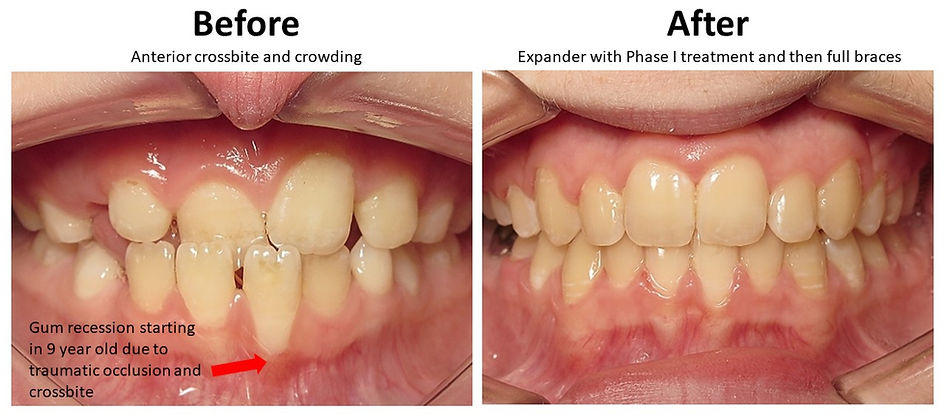
Underbites need to be corrected when kids are ages 7-9!
An underbite is a result of the upper jaw being too small and too far back. A lot of times, you cannot even see the front teeth when a child smiles. Usually, we need to bring the upper jaw forward when the jaw is very moldable and flexible around age 7-9. Most times, I will need to use a combination of a facemask, expander, and some braces.
Underbites are one of the most critical issues to correct early since later on, when the jaw hardens, they are not correctable, and jaw surgery might be needed. Early orthodontic treatment is easy and very effective to prevent significant issues!
Missing Adult Teeth and Early Orthodontics
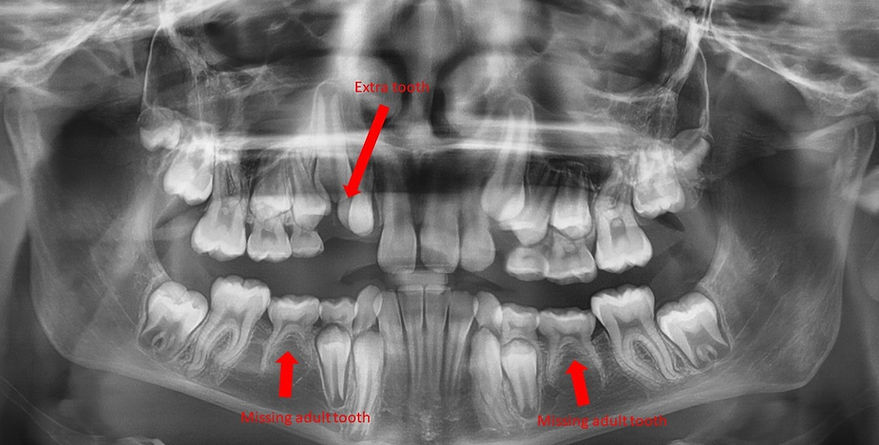
I cannot tell you how many times I see a teenager that doesn’t know they are missing an adult tooth. Missing permanent teeth have a strong genetic link (sometimes it skips a generation) but I’ve seen many cases where it’s just a random occurrence. With missing teeth, it’s important to have a plan when kids are younger. My philosophy is to try to use the other teeth to substitute for the missing tooth and keep the natural dentition, if possible.
Sometimes, implants are needed to replace missing adult teeth. Implants are a lengthy dental process, expensive, and are placed when kids are done with growth, which is about age 18-22 years old. Implants present esthetic challenges since we now need to come up with a solution for maintaining a space holder for a missing tooth. When I see kids at age 7-8 years old, we can discuss options and possibly plan for alternatives: sometimes this means preserving some of the other baby teeth or sometimes this means taking out the baby tooth to allow an adult tooth to erupt into a better location.
What are the benefits of early orthodontic treatment?
Early orthodontic treatment can guide jaw growth, create space for permanent teeth, reduce crowding, correct crossbites and underbites, reduce risk of trauma to protruding front teeth, improve facial balance, and potentially prevent more complicated orthodontic treatment later. In some cases, early treatment can reduce the need for tooth extractions or jaw surgery.
Is early orthodontic treatment necessary for every child?
Not every child needs early orthodontic treatment. Some children benefit from waiting until all permanent teeth come in before starting orthodontic treatment. The best way to determine whether early orthodontic treatment is needed is to schedule an orthodontic evaluation around age 7 so the orthodontist can monitor growth and development.
What is Phase 1 and Phase 2 orthodontic treatment?
Phase 1 orthodontic treatment refers to early treatment performed while a child still has baby teeth and permanent teeth. This phase focuses on jaw growth and bite correction. Phase 2 orthodontic treatment occurs later when all permanent teeth have erupted and typically involves braces or Invisalign to straighten teeth and finalize the bite.